News
Cold Saw vs Band Saw: Uncovering the Hidden Costs in Metal Cutting
08 Jun February 2026 | LionNord Industry
Plant owners and procurement officers often hesitate between cold saws and band saws when upgrading equipment. On the surface, the choice seems budget-dependent. However, as veterans in the metal processing equipment sector, LionNord Industry reminds you that the real profit gap lies in the cost per cut and the consumable depreciation rate once the machines are running.
Today, we break down the technical differences and financial implications of these two machines to help you allocate your equipment budget effectively.
Core Technical Comparison: Quick Decisiveness vs. Steady Progress
Before making a purchasing decision, it is critical to understand the mechanical principles of both systems:
Cold saw machine: Utilizes a circular saw blade rotating at low speeds to mill metal. It is characterized by being "cold"—the cutting heat is transferred into the chips rather than the material, keeping both the workpiece and the blade at room temperature.
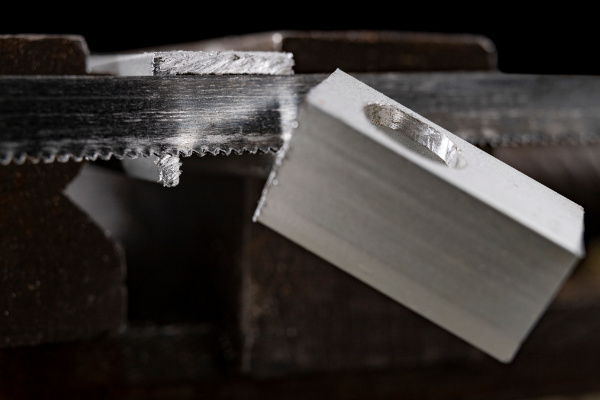
Metal band saw machine: Uses a continuous metal band for unidirectional cutting, typically regarded as the reliable workhorse for heavy, large-sized materials.
Data Table: Real Performance at a Glance
To provide an objective comparison, we have compiled frontline test data from multiple Steel Service Center facilities:
Comparison Dimension | Cold Saw Machine DOCX | Metal Band Saw Machine DOCX |
Cutting Speed | Extremely fast (typically 3-5x faster) | Slower |
Cut Face Quality | Mirror-like, burr-free, no secondary processing needed | Visible cutting marks, usually requires grinding |
Kerf Loss | Larger (approx. 2-3mm) | Smaller (approx. 1-1.5mm) |
Initial Investment | Higher | Lower |
Ideal Applications | High-efficiency batch cutting of small/medium tubes and solid bars | Large steel ingots, heavy profiles, irregular structural shapes |
Pros, Cons, and Cost Analysis
When making procurement decisions, evaluating the total life-cycle cost is far more critical than simply looking at the machine's price tag.
Band Saw Pros & Cons:
Advantage: As an experienced industrial band saw machine supplier, we acknowledge that band saws offer a lower initial cost and minimal kerf loss due to thinner blades. For expensive alloy materials, the savings on scrap metal are significant.
Disadvantage: Cutting precision is limited. The process often requires extra chamfering or grinding downstream, which directly increases labor costs.
Cold Saw Pros & Cons & Hidden Costs:
Advantage: The cold saw is undeniably the efficiency king as a steel bar cutting machine. Taking the batch cutting of solid carbon steel bars as an example, one cold saw can match the capacity of three band saws, immediately saving the wages of two operators and the floor space of two machines.
Cost Analysis: As an automatic circular saw manufacturer, we note that while the upfront cost of our equipment is higher, the tool cost amortized per cut is extremely low because the saw blade can be resharpened and reused multiple times.
Q1: If my factory mainly processes various steel rebars and solid bars, what is the best saw blade for steel bar cutting?
A: We highly recommend Tungsten Carbide Tipped (TCT) or cermet cold saw blades. Compared to traditional bi-metal band saw blades, they offer extremely fast single-cut speeds and exceptional lifespans, making them ideal for integration with equipment from a top-tier automatic circular saw manufacturer.
Q2: I am looking for a reliable best metal cutting machine supplier. How does LionNord differ? A: LionNord Industry provides more than just machinery; we deliver complete metal sawing solutions. We calculate the exact cost per cut based on your factory's specific materials and daily production requirements, rejecting blind upselling.
 English
 chinese